
AI video telematics
See the incident coming. Then stop it.
Our AI dashcams and multi-channel MDVRs run driver-monitoring (DMS), advanced driver-assistance (ADAS) and blind-spot (BSD) models on the device. Risk is detected in milliseconds, the driver is warned in the cab, and the clip with all its metadata is already in your platform.
Fatigue and driver safety
Five lines of defence in every cab.
One AI camera works on three timescales: it reacts to events, intervenes in the moment and predicts risk before the next shift.
A clip from before, during and after the event, with speed, time and GPS, lands in the platform automatically.
Critical events go straight to supervisors or the 24/7 bureau for an immediate call to the driver.
Dual-camera replay settles disputes and defends drivers against false claims.
Events are acknowledged, commented on and closed with a full audit trail.
Every incident feeds driver scorecards and the next coaching session.
Eye and head tracking spots drowsiness and microsleeps before the driver notices them.
Forward-collision, headway and pedestrian warnings give the driver time to react.
Clear audio and light warnings correct behaviour on the spot, without waiting for a supervisor.
Repeated fatigue events prompt a break and notify the supervisor.
Phone, smoking, seatbelt and distraction alerts keep attention on the road.
AI ranks drivers by fatigue risk from event history, shift times and hours driven.
Patterns across night shifts and long hauls show where fatigue builds up.
Maps show the roads, ramps and hours where events cluster.
The drivers and behaviours that need attention first, ranked every week.
Fit-for-duty checks flag a high-risk driver before the shift starts.
Fatigue monitoring in the field
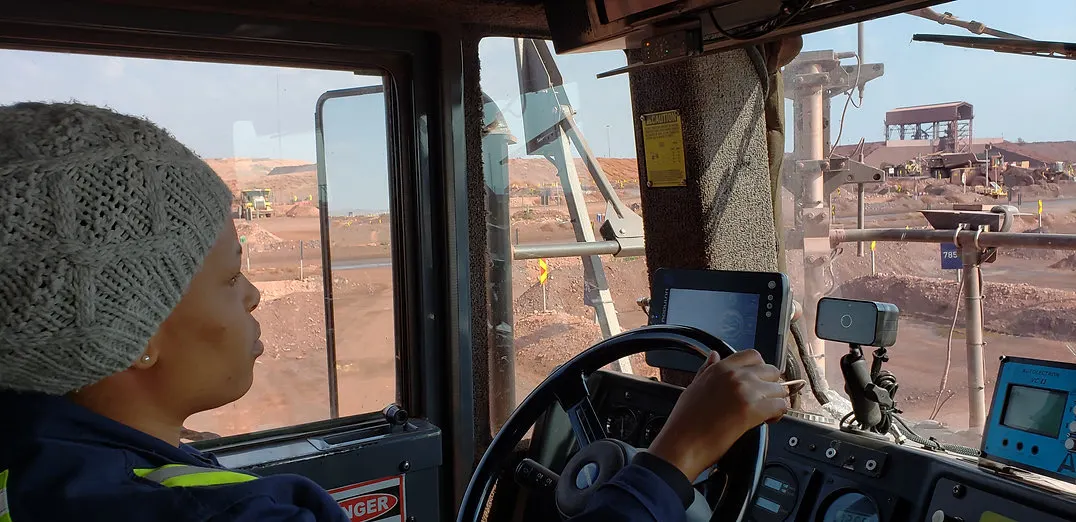
The second yawn triggers an alert, not an incident.
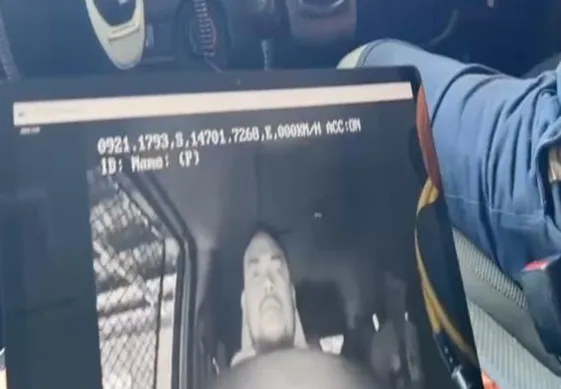
Infrared driver-monitoring cameras keep watching through night shifts, sunglasses and dust, and warn the operator in the cab the moment fatigue shows.
 AI · Fatigue monitoring
 DMS · Infrared
What the AI watches
Three models. Every critical second on the road.
DMS · Driver monitoring
- Fatigue and yawn detection
- Distracted driving
- Phone call and smoking
- Seatbelt not worn
- Driver not attended / left duty
- Sunglasses, mask and camera-cover detection
- Facial recognition for driver ID and attendance
ADAS · Road awareness
- Forward collision warning (FCW)
- Pedestrian collision warning (PCW)
- Lane departure warning (LDW)
- Headway monitoring warning (HMW)
- Front-vehicle start warning
- Traffic sign recognition (TSR)
BSD · Blind-spot detection
- Up to 3 blind-spot camera channels
- Cabin LED and audio alarm
- Outside warning for pedestrians
- Seat-vibration alerts for haul trucks
- Pedestrian and cyclist recognition at low speed
Hardware range
From a 5-minute mini dashcam to an 8-channel mining MDVR.
All devices share one platform, one H-protocol/API and one user experience. Choose by vehicle, not by vendor.
| Device | Channels | AI features | Best for |
|---|---|---|---|
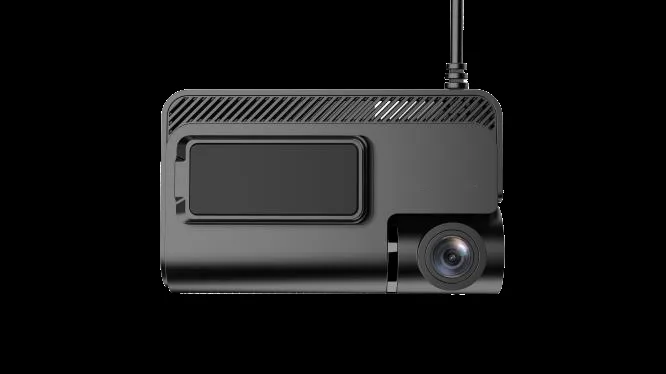
| Mini AI dashcam | 1 + 1 (road + cabin), 1080p | DMS, ADAS, face recognition | Light vehicles, pool cars, rapid rollouts (OBD plug-and-play) |
| AI dashcam V3 / V8 | 2 + 1 or 2 + 2, up to 4 cameras | DMS, ADAS, TSR, built-in panic button, GSM call | Haulage, buses, supervisors' vehicles |
| AI MDVR 4-channel | 4 cameras, SD or HDD | DMS + ADAS + BSD, 4 TB storage | Trucks, tankers, cash-in-transit |
| AI MDVR 8-channel | 8 + 4 cameras, HDD/SSD | DMS + ADAS + BSD + pedestrian collision, open for custom algorithms | Dump trucks, man-haulers, mining buses |
| Mobile data terminal | 7" rugged Android, 2 camera inputs | Dispatch, speed control, navigation | Mining dispatch, ambulances, waste fleets |
Accessories
- Panic button, push-to-talk
- Fuel sensor and fire-proof box
- iButton driver ID, immobiliser relay
- TPMS tyre-pressure, OBD/CAN bus
Connectivity
- 4G/5G with H.265 to save data
- Wi-Fi offload in the yard
- Satellite adaptor for remote pits
- Dual storage, power-loss protection
Fleet tooling
- Remote and batch firmware upgrades
- Remote parameter setting
- Auto-calibration for DMS
- Mobile iTool app for installers
Platform
- Live streaming and playback
- Event clips with speed/time/GPS overlay
- Incident management and comments
- Open VSS API to your FMS
Why fleets switch
Video turns an argument into evidence and a bad habit into a coaching session.
- ✓Driver coachingVideo, vehicle and behaviour data in one view give managers everything they need to curb unsafe driving.
- ✓Visual event analysisSeconds before, during and after each event, with text overlays, in a single clip, inside the trip history.
- ✓Insurance outcomesDispute false claims and prove fault. Fewer accidents mean fewer claims and lower premiums.
- ✓Lower running costsBetter driver behaviour reduces fuel consumption and maintenance wear across the fleet.
Fatigue was our biggest night-shift risk. With in-cab AI alerts and bureau escalation, supervisors act on the second yawn, not the rollover.Operational outcome reported on an open-pit fleet in Ghana
Questions
Common questions.
What is AI video telematics?
AI dashcams and MDVRs that run driver-monitoring (DMS), advanced driver-assistance (ADAS) and blind-spot (BSD) models on the device. They detect risk in milliseconds, warn the driver in the cab and send the event clip, with speed, time and GPS, to the M2M platform.
Which behaviours does the camera detect?
Fatigue and microsleeps, distraction, phone use, smoking and missing seatbelts in the cab, plus forward-collision risk, short headway, lane departure and pedestrians on the road, and people or light vehicles in a truck's blind spot.
Where are M2M AI cameras in use?
AI video telematics from M2M Solutions is live on mine sites in Ghana, Ivory Coast, DR Congo, Tanzania, Pakistan and Suriname, installed and supported by M2M's own technicians.